
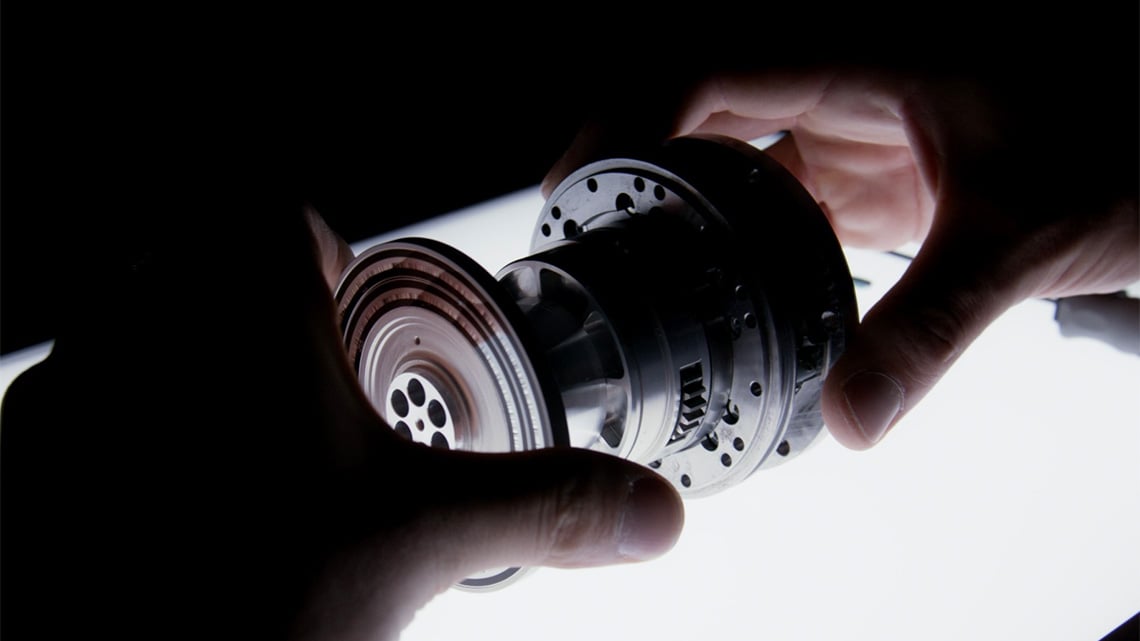
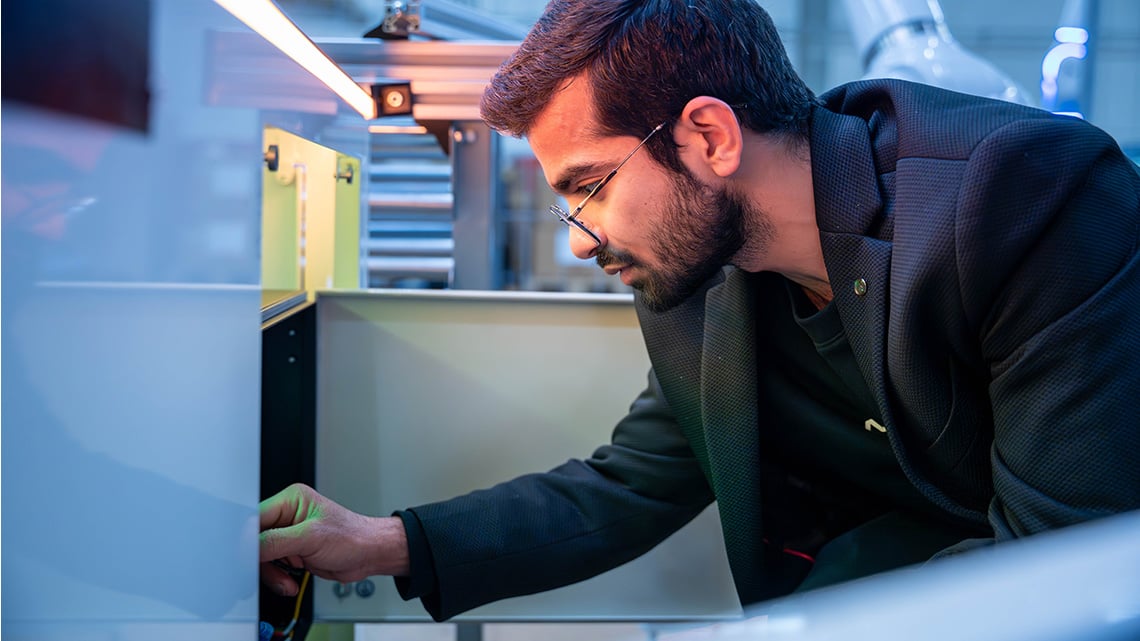
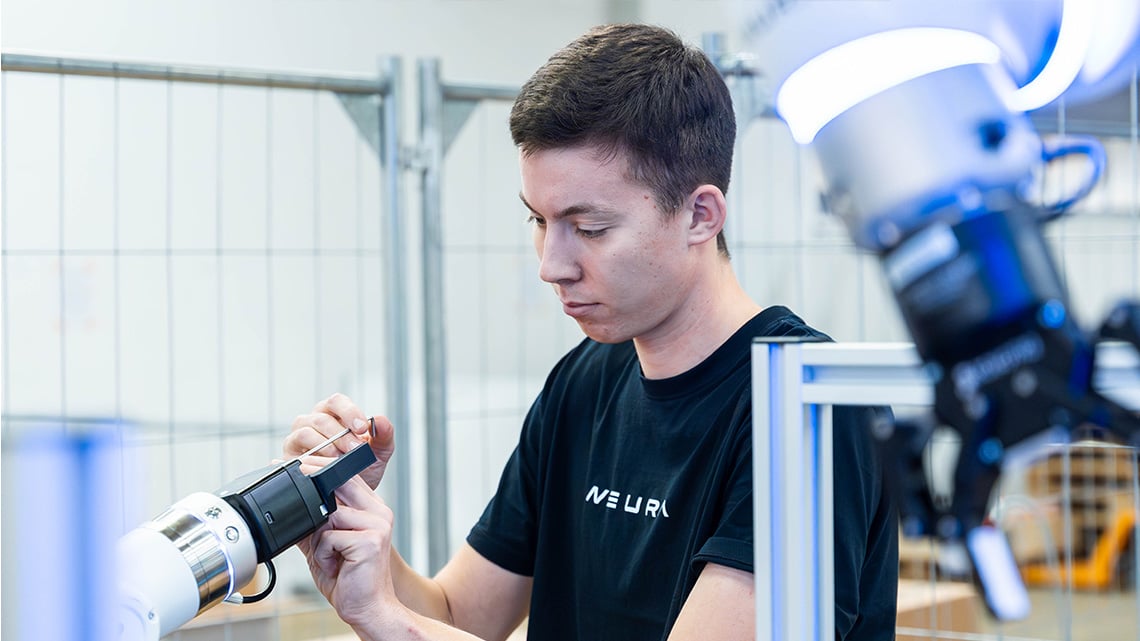
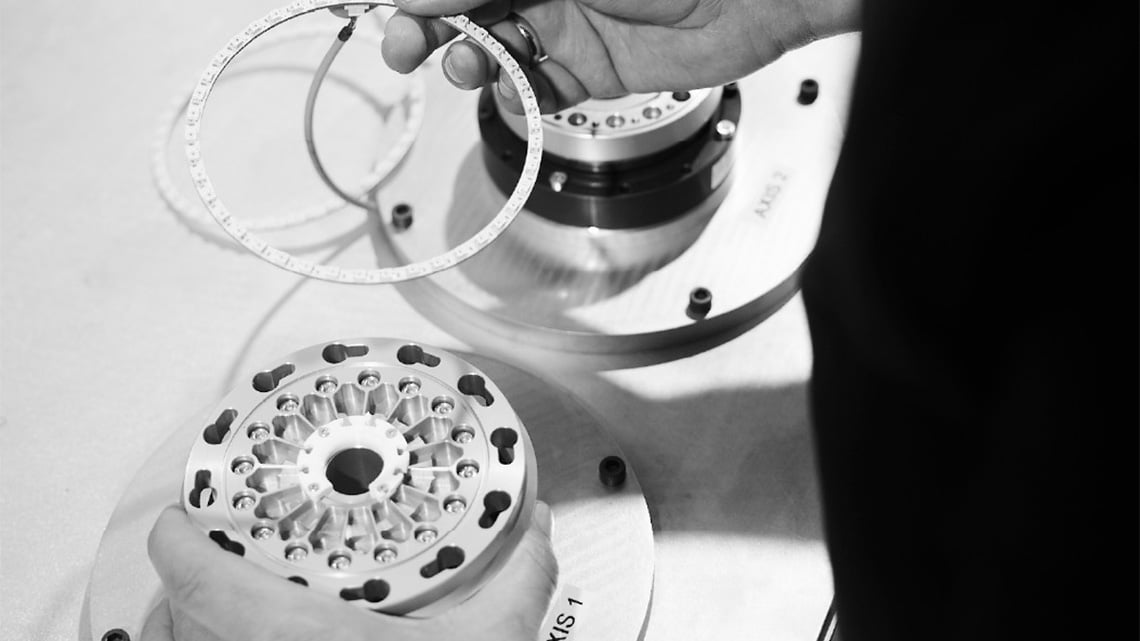
The Hardware Department is at the heart of developing our high-performance and innovative robots. It's in charge of designing, constructing, and optimizing the robot's physical components, including mechanical parts, sensors, and electrical systems. The team collaborates closely with other departments, like software development and product management, to ensure that the hardware aligns seamlessly with software and system requirements. This involves tasks like mechanical design and prototyping of components, using CAD tools and 3D printing technologies.

Sensor Hardware Engineer – Tactile, Audio & Vision (human)
Neura Robotics • Freising (Oberbayern)
This is where Artificial Intelligence comes to life
-
Full-time
Freising
from today
You own the sensing stack, from first signal to production release. NEURA Robotics builds robots that have to feel, hear and see. A large part of that sits in the humanoid hand: tactile sensing in fingertips and palm, force and torque in the joints, all in a space that leaves no room for a comfortable design. Around it come microphone arrays for speech and acoustic events, and camera and depth modules that survive vibration, heat and tight packaging. You take these sensors from concept to a characterized, calibrated, production-released design, together with our electronics, firmware, perception and mechanical engineers.
Your mission & challenges-
Sensor architecture: You select, specify and benchmark tactile, acoustic and optical sensors against what the robot actually needs: resolution, noise floor, latency, power, cost and supply risk.
-
Tactile and force sensing for the hand: You design and integrate tactile arrays and force/torque sensing for fingertips, palm and joints, including the low-noise analog front-ends behind them. You make sure they fit, mechanically and thermally.
-
Characterization and calibration: You run the measurement campaigns, build the fixtures, and turn your lab procedure into something production can repeat on every unit.
-
Bring-up and debugging: You lead sensor bring-up in the lab and trace problems end-to-end, from a noisy supply rail through the front-end to a perception result that looks wrong.
-
Hardware design and transfer to production: You design or co-design the sensor PCBAs and flex assemblies (depending on the product, both happen here). You own the manufacturing documentation and work with EMS partners and sensor vendors to release them for series production.
-
Firmware and perception interface: Firmware development is not your main job, but you can read it, write enough of it to bring a sensor up, and support the firmware team on drivers, timestamping and synchronization. With perception, you agree on what the data has to look like for their models to work.
You know sensors inside out, and you trust measurements over datasheets. You are hands-on, as comfortable with an analog front-end schematic as with a measurement setup, and you treat characterization and calibration as part of the design.
-
Education: Degree in Electrical Engineering, Electronics, Mechatronics, Physics or a comparable field.
-
Experience: 3+ years with sensor hardware, with ownership from concept through characterization to production release.
-
Analog & mixed-signal design: Low-noise front-end design with instrumentation and charge amplifiers, capacitive and bridge conditioning, ADC selection, grounding and shielding.
-
Modalities: Hands-on experience with at least two of the three modalities (tactile/force, audio, vision/depth), and the willingness to own all three.
-
Sensor interfaces & timing: I²S/TDM/PDM, MIPI CSI-2, SPI, I²C, and synchronization across sensors.
-
Measurement in practice: You design the experiment, build the fixture, and know a real effect from a measurement artifact.
-
PCB & flex design: Working knowledge of Altium Designer or comparable tools for compact sensor assemblies.
-
Languages: Fluent English; good German is a strong advantage.
A strong plus:
-
Robotic hands or grippers: Tactile skins, slip detection, sensing in very tight packaging.
-
Acoustics or optics: Arrays, beamforming, anechoic measurement, or lens selection, illumination and depth.
-
Sensors in harsh conditions: Vibration, thermal cycling, cable and flex fatigue.
What you can look forward to
Creative Freedom and Agility
Enjoy a dynamic, self-reliant work culture with flat hierarchies, flexible hours, and 30 vacation days. Ideal for those seeking an inspiring professional setting, whether you're starting out or an experienced exec.
Passion for Winning
A passionate and highly skilled team of international experts aiming to redefine robot assistants.
Attractive Compensation
Enjoy a competitive salary package along with exclusive employee discounts.
One Team
Whether it's a summer party or company town hall meetings, we celebrate our successes together.
Professional Growth
Support for your personal and professional development.
Our values. The cornerstones of our success.

STRONGER TOGETHER
We are a team. We strive to achieve great things by promoting the success of our colleagues and partners.

PASSION DRIVES US
We strive for technological progress in order to give people back their valuable time for enjoyable activities.
MAKING A CHANGE
We strive to revolutionize the world of robotics by pushing the boundaries of technology every day.
TRUST AND HONESTY
We live a high level of appreciation through open communication and transparency.
WE SPEED THINGS UP
We do our best to always be two steps ahead. We achieve this through empowerment, freedom of action and personal responsibility.
WE ARE HUMAN
People are at the center of everything we do.
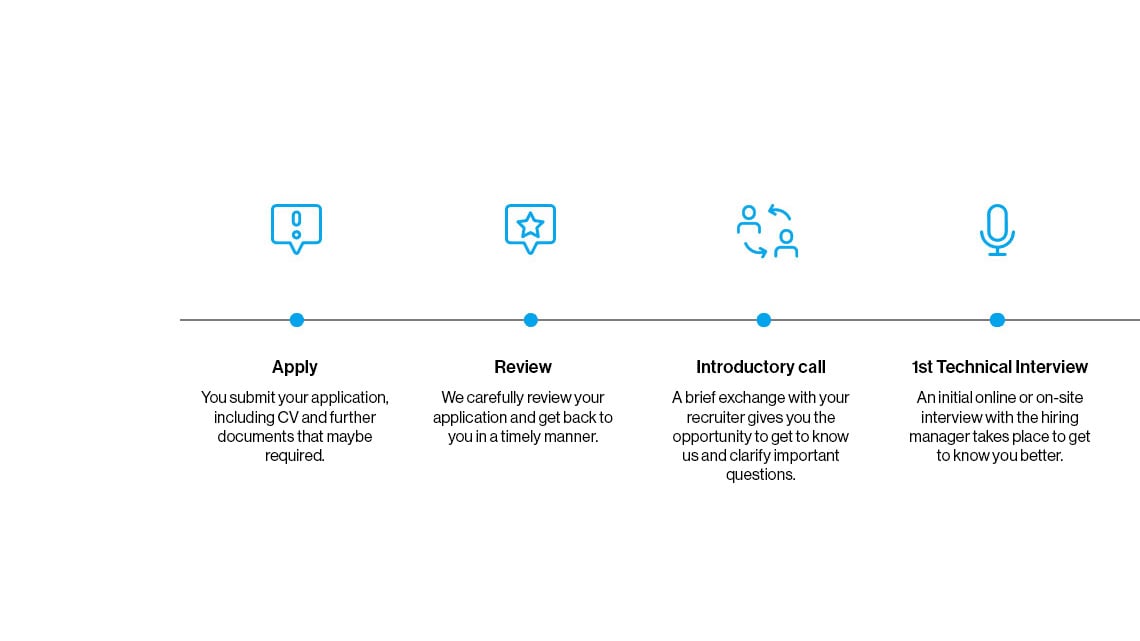
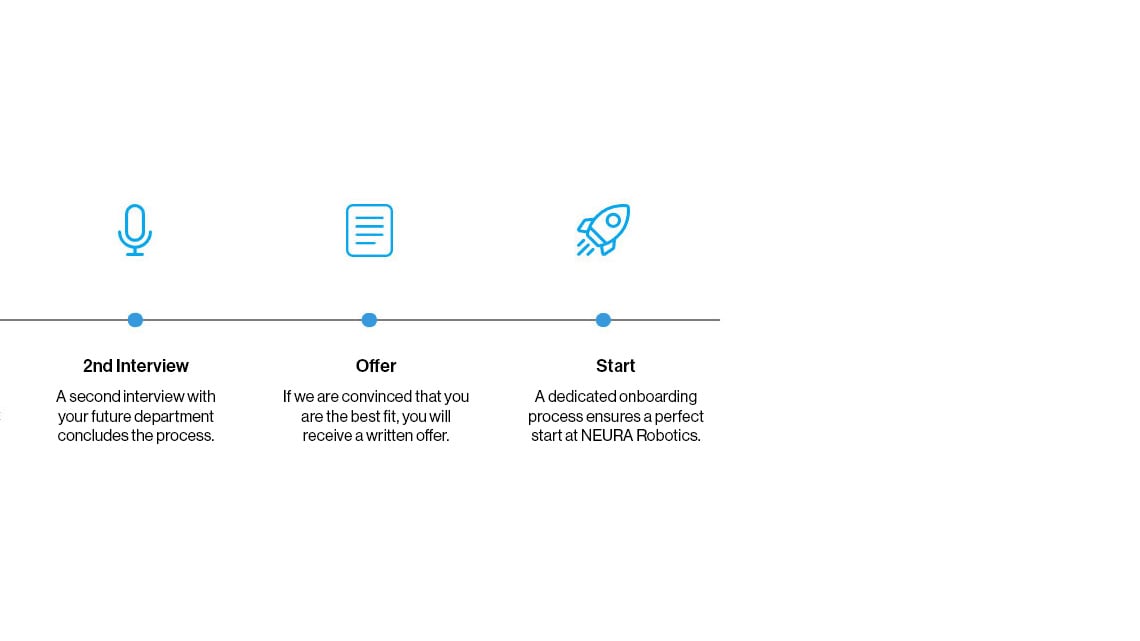
Our application process
We ensure a transparent and efficient process and look forward to getting to know you during the application process.
1/2
2/2
Your insight into our daily work
1/5
2/5
3/5
4/5
5/5
Unsere Mission
David Reger
Gründer und CEO
"Our goal was to develop the world's first cognitive robot that can work with people, learn from them and provide them with targeted support. And that is exactly what we have achieved. But there is much more to come!"